Location, service range and opening status
Industry Solutions
Commerce Designed for Real Operations
We design around customer acquisition, product organization, fulfillment ownership and settlement—not an industry label pasted onto a generic feature list.
Scene Before Feature
Understand Business Before Systems
“Inventory sync” means available stock and pickup for a brand store, ownership and liability for a marketplace, and title, channel pricing and routing for a supply network. A useful solution starts with these real constraints.
Customer journeyWhere customers arrive, decide, receive orders and request service
Team coordinationHow headquarters, stores, merchants, suppliers, warehouses and finance collaborate
Current systemsResponsibilities of ERP, POS, WMS, CRM and finance platforms
Stage objectivesWhether to validate the transaction loop first or launch broader omnichannel operations
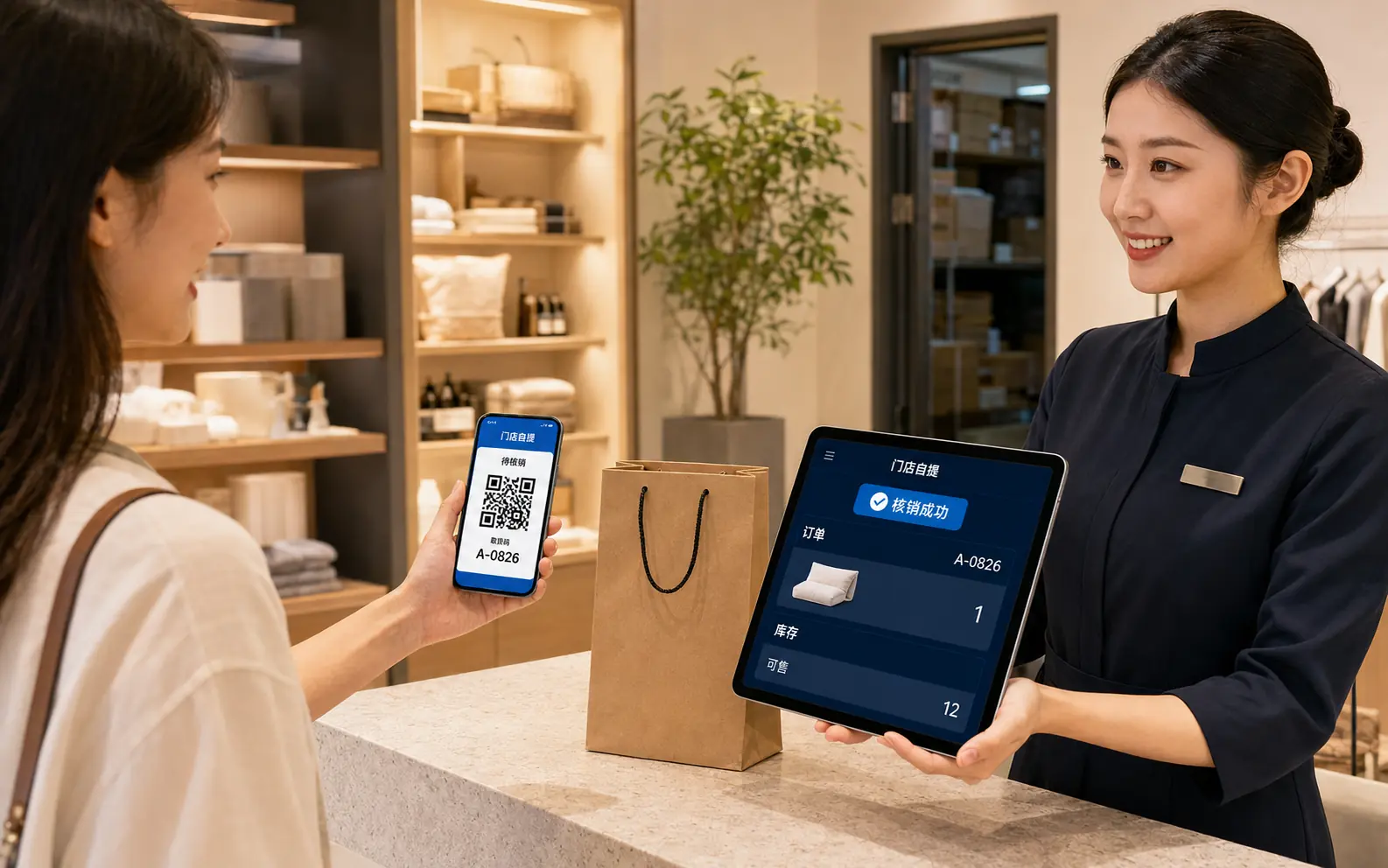
Omnichannel Retail
Connect Online Orders and Store Service
A store is more than a pickup point, and a digital store is more than an online shelf. Customer identity, store stock, advisor service, orders and after-sales must share one operational state.
- Real-time available store inventory
- Click and collect with QR verification
- Ship-from-store and local delivery
- Online ordering and cross-store returns
- Advisor attribution and performance
- Shared online and offline benefits
Retail Loop
From Store Promise to Completed Pickup
Before “available for pickup” appears, the platform has already checked service range, sellable stock, preparation time and verification permissions.
Live stock, safety quantity and transfers
Pickup time, store and customer benefits
Acceptance, picking, shortage and rerouting
Identity, redemption, stock issue and receipt
Returns, stock recovery and attribution
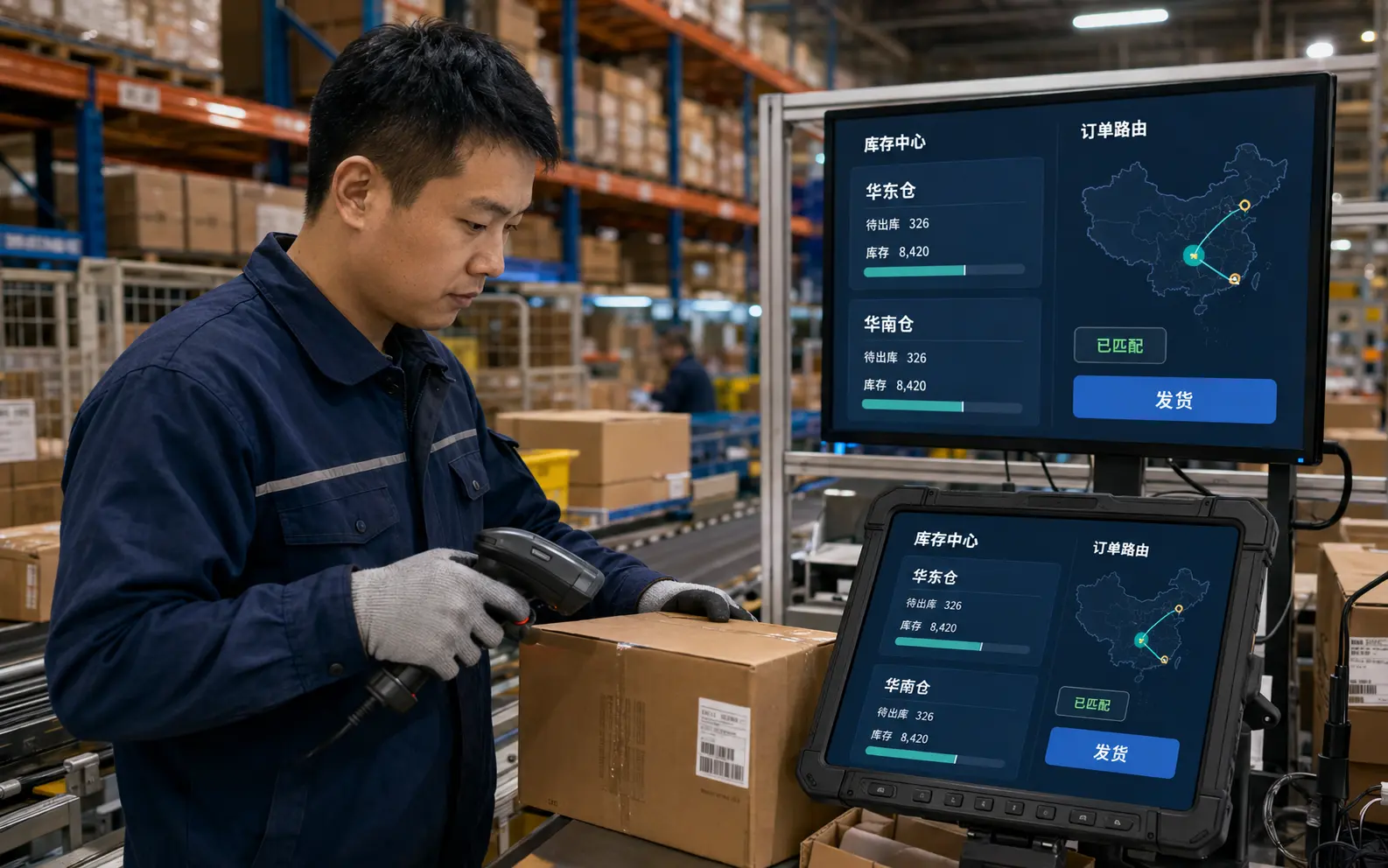
Supply Chain Commerce
Route Every Order to the Right Stock
Industrial commerce must support channel assortment and ordering while resolving supplier inventory, ownership, channel prices, drop-ship rules and multi-warehouse fulfillment. Explainable routing is the core.
- Supplier and channel assortment pools
- Channel tiers and price systems
- Shared inventory and protection rules
- Order splitting and routing
- Supplier drop shipping and warehousing
- Returns, liability and settlement
Scenario Portfolio
Six Common Commerce Scenarios
The scenario determines priorities. Each engagement starts from the current problem, key roles and first-release objective—not invented growth claims.
From Channel Sales to Membership
Unify identity, content, benefits and repeat-purchase operations in a brand-owned channel.
- B2C
- Membership
- Content
Online Orders Meet Store Service
Connect products, prices, stock, orders, advisors and after-sales across channels.
- Store inventory
- Pickup
- Attribution
Turn Platform Rules into Workflows
Build merchant onboarding, catalog governance, commissions, settlements and service liability.
- Merchant center
- Fund split
- Governance
Unify Products, Prices and Delivery
Connect suppliers and channels with shared catalog, channel pricing, inventory routing and drop shipping.
- S2B2C
- Multi-warehouse
- Drop ship
One View Across Multiple Markets
Configure local products, currencies, payments, taxes and logistics while headquarters sees unified performance.
- Multi-site
- Multi-currency
- Global logistics
Extend the Existing Core
Keep a stable ERP or WMS while adding customer experience, marketing or unified order services.
- Incremental change
- API integration
- Data migration
Solution Method
Every Solution Answers Four Questions
A business blueprint converts abstract requirements into reviewable roles, flows, rules, data and acceptance outcomes before product and technical design begins.
Who Participates?
Define customer, operations, merchant, warehouse, service and finance roles.
How Does Work Flow?
Map standard transactions, exceptions and reverse logistics.
Where Do Rules Live?
Assign pricing, promotion, inventory, settlement and permission ownership.
How Is It Verified?
Turn launch objectives into executable tests and business acceptance criteria.